



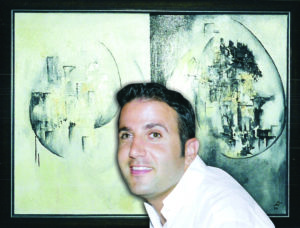
HOW I REMEMBER NAJI!
The Naji Cherfan Foundation was established to remember the life of Naji Cherfan who was born on November 20th 1978 to a Christian family, he was the youngest child of his two brothers.
Naji was a boy full of life, passionate to help others especially his friends. He was loved among all those who knew him.
Naji’s presence changed the lives of his family, friends and of those around him.
Naji didn’t just walk through life; he left an indelible mark on everyone he met. He taught the value of life, i.e. virtues, patience, joy, integrity, a lesson to everyone.
He wrote several books, during his recovery period, he never surrenders to pain and difficulties.
His book “Virtual Patience” is dedicated it to the most two important people in his life (His father and his mother).
As well as, he wrote “A Little book of Inspirational Thoughts, where he expresses his feeling and lesson during his life journey and healing period.
As his faith was growing, he began questioning his beliefs. He said to himself, “If you want to get to the top of the mountain, aim for the stars”. When relating this to God, he said “if you want to get to the top of the mountain aim for Christ and keep your eyes on Jesus”.
From 1999 to 2001, Naji and his father traveled to therapy centers in Arizona, Texas and Florida. In each city, they found good doctors and people who contributed to Naji’s recovery and progress. Finally, he moved to Florida where he had many close friends. He studied multi-media at the Art Institute of Fort Lauderdale and then returned to Greece where he enrolled in BCA (Business College of Athens) and graduated with an associate’s degree in E-Business. For the past three years, he has worked in the family business in administration and public relations. Over the years of his recovery, he has continued to write and edit his writings. His journey is one of determination, courage and change. His most recent thoughts are summarized in the last pages of this book. These are the words of a man who took one traumatic experience and transformed it into a way of life. Naji Cherfan was 17 when he had the “two second experience” that forced him to review everything that he had ever known and learned. On November 20, 2005 he turned 27. This decade of his life is revealed in “Virtual Notes”
Naji left us on July 31st 2008 from brain injury due to a motorbike accident.
Naji may be gone, his spirit will forever echo in our hearts and memories. Thank you, Naji, for the love, the laughter, and the light you brought into our lives. We will miss you dearly, but never forget you.”
The Naji Cherfan Foundation
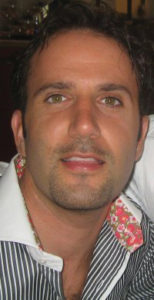
Excerpt from Virtual Patience/ Page 29
On June 8, 1999 Naji Cherfan wrote these words and faxed them to a friend in Greece: “While in Canada I came to realize there wasn’t much wrong with me. So what if my left hand and my right leg are not 100%. After all, nobody’s perfect. I am very lucky. Some people don’t have any legs or arms. I have to accept things and improve on myself as much as possible, be happy with myself first as I am and then do my best to improve. There will be no limitations to what my mind can achieve”.
Ten years after the brain injury which stole his sight, speech and ability to move, this young man is making his dreams come true. He has learned that patience is a virtue and he’s putting it to good use. The journey from accident-to-coma-totherapy-to-a normal life continues for Naji Cherfan.
“They can because they think they can” — Virgil
VIRTUAL PATIENCE/ page: 25
While recovering, Naji Cherfan considered himself a miracle in the making. After undergoing intensive therapy in Greece, Germany and Canada, he began achieving the goals he set for himself so long ago. Realizing what he had accomplished through therapy and personal effort, this courageous teenager moved forward and lived with his disability. “You just consider yourself normal and say forget it man. It was only a two second accident. You don’t need intensive therapy or serious help anymore. The best therapy is attending college and living a normal life like everyone else. Forget the past. I have the chance to make it like most of my friends. I can walk, think and most of all I’m conscious. Honestly. I don’t mind. It could have been worse. Life is my therapy”.
Three years before Naji could not have imagined saying those words. Life may not be fair, but it always gives the opportunity for growth and learning. He wrote in his journal the following words: “Picture yourself two years from now and consider yourself normal, unless a very important handicap privilege is needed”. During some of his darker moments, he would go to the mountain to breathe for a while. Then he would say to himself “Never, never, never let people feel sorry for you unless you like this feeling. Always have your pride and dignity”. During these moments he considered other people less fortunate than himself and realized that he had the ability to make himself happier. He began appreciating what he had and where he was in his life.
VIRTUAL PATIENCE / page: 25-26
These were new thoughts for Naji, as he was accustomed to moving through life with a sense of carelessness. He expressed these ideas both verbally and in writing. Physically and spiritually changed, he visualized that one day he would wake up perfect. Day by day, movement by movement, he saw progress. He realized that recovery depended on time, patience and very hard work. Praying for another miracle, he insisted that he could do anything. His greatest fear was that he wouldn’t recover, so he played games with his subconscious mind to convince himself that one day he would be perfect in the eyes of others. He discovered that fooling himself like this actually worked. By believing so strongly from his heart, Naji learned about the fine line between reality and fantasy and the connection between concentration and result. He had finally stumbled upon the power of focus and its benefit to physical and emotional accomplishment. He realized this during a session of physiotherapy in Montreal when his therapist Frank told him that he had to integrate into society. He advised Naji to live in reality instead of hiding somewhere, waiting for another miracle to happen. At this moment Naji faced his present situation with the truth and not an illusion. Looking in the mirror, he saw a young man just a few weeks from his 20th birthday. Instead of walking with difficulty, he now moved in a smoother, more balanced way. His vision, memory and concentration were greatly improved. School was going well and he was motivated by his classes and therapy. Communication with friends through telephone and internet was a source of comfort and strength.
Virtual Patience/ Page 26-27
Although he had trouble concentrating when tired, Naji’s mental abilities remained strong after the accident. He was not aware of how powerful the mind could be until he became more serious and said to himself “Man you got to challenge yourself big time and consider everything possible”. This idea motivated Naji to function normally in a body that refused to listen and couldn’t remember what it did before his brain injury. His mind remembered physical freedom and urged his arms and legs to go there. They followed his command, but with limitation. Thought wills the physical and emotional structure to stretch and be challenged. Slowly, Naji learned that the mind is a double-edged sword. One side is the enemy while the other is the savior. Naji sent this fax to a friend in Athens:
“One day in school, I couldn’t focus on the problem being explained in class. Then I started asking myself, why am I having such trouble focusing? An idea came to me. It’s a tension in the mind. WOW!!!. If the mind can have tension and we know that everything comes from the mind, then I see that the tension in my body comes from my mind. GREAT! I Get it? I relax my mind; my body relaxes. Simple. So simple, it seems to be too easy. OK, how does it work? How can I relax my mind? Focusing on too many things creates tension. Solution. Focus on one thing at a time”.
As a result of “lots of therapy and lectures from people who love and support him”, Naji threw away his judgmental attitude. Maturity convinced him that “he couldn’t leave and he couldn’t get out”. Naji does his own therapy by concentrating and using self-discipline. Slowly, he is gaining an understanding and appreciation of the meaning of respect for himself and others.
Virtual Patience/ Page 27
Being with Naji Cherfan is a stimulating experience. His communication is direct and even though his behavior is sometimes self-centered, he has a unique charm. Naji continues to develop his mind and experiment with expansive thoughts. He has discovered a wealth of blessings that make his life satisfying and full of opportunities. One day he went down the stairs leading to the family apartment in Montreal. As he went deeper into the darkness, he realized how small his thoughts had been until now. Something “clicked” between his mind and his heart until he could no longer deny a purpose for his life. He had to think big, to go beyond what his ego wanted or what his patterns told him to do. He said out loud “It’s only me, myself and I”. This time he believed his words. He understood that he had the qualities for success and all the blessings that family, friends and love could provide. Happy just because it was summertime, he was grateful to his therapists and doctors for helping him get to this brilliant new space where things made sense. He laughed inside and said “just watch me fly”.
Throughout the years of his therapy, Naji kept a journal and wanted to write a book about his experience. In 1998, he began editing his journals and put this ahead of all other activities. This process took him closer to his goal of writing a book that would describe the events leading to the accident, his coma, therapy and recovery. “I know so many others that have had similar cases, even worse, but none of them actually spoke about it. I did it just to let it out and let everyone know what I went through. Most of all, I want to help all those out there in the same position that I was in. The things in this book are very personal, but I just had to let it out and express the way I feel”. Finally, he finished the book in his head and dedicated it to the therapists who taught him to walk and the one who taught him to breathe and speak from the center of his body. At last he understood his father’s words: “Patience is a virtue, there is time for everything and fear not”.
Imagine going to sleep and waking up two months later in a new world. Imagine your family and friends speaking to you and making plans while you lie there in silence. Your mother knits a sweater; your girlfriend shares all the news from high school and your father tells you three things every day: patience is a virtue, there is time for everything and fear not. They never doubt you will wake up, even though the doc tors say that if you do, you won’t walk, talk or see. Now imagine that on your 18th birthday you open your eyes for the first time in eight weeks. You’re in a hospital room with everyone around you ready to celebrate the day you were born. For a young man living in Athens this was not his imagination…it was his reality. On November 20, 1978 the third son of George and Sana Cherfan was born. They named him Naji, which in Ara bic means “prayer to God”. Seventeen years later, Naji suffered a traumatic brain injury after a motorcycle accident in which his friend, the driver, was killed instantly. Naji fell into a coma and doctors realistically informed his family that chances of recovery were very limited. Perhaps they didn’t know about his name or believe in prayer. Naji’s family had friends in many parts of the world and those friends had faith that he would wake up and start living again. On November 20, 1996 he opened his eyes and moved his toes. He was blind, deaf, mute and paralyzed. He later remarked that he had been a baby twice: once when he was born and once when he came out of that deep, silent sleep.
I was introduced to Naji Cherfan in late 1997. Physio therapy in Greece and Germany had miraculously restored his ability to walk and talk, but he needed to improve his speech and breathing patterns. A teacher at his university suggested my name to his mother who was looking for someone to work with Naji’s voice. The day we met was the beginning of a collaboration, a friendship and a journey. Nine years later, Naji still inspires me and opens my mind to the possibilities of life. He charms and woos me with his sense of truth and humor. This is what he seeks in life…truth at any cost. Someone told me once that the truth will set you free but first it will make you angry. Maybe anger is a catalyst for change. Maybe grief is the turning point for appreciating what is important in life. Maybe we lose some things in order to receive others. Life for Naji Cherfan is a challenge and an exercise in patience for himself as well as others. Naji’s determination to rebuild his life is described in a book he dictated to me called “Virtual Patience”. It documents the beginning of a journey from an event that could have been considered a tragedy. However, man has the power to choose and Naji Cherfan chooses to look at things from another perspective. He says that any two second flash can change your life forever. He should know…it happened to him. He looks at the world with an eye for honesty, searching deeply the meaning of existence. Since coming out of coma in 1996, Naji has been motivated and inspired to write about the changes in his life as a result of the accident. Recent research shows that people who write about traumatic events that they have experienced have a faster rate of recovery and heal better emotionally. In the first few months of Naji’s rehabilitation, he knew he wanted to share his story. Maybe he was not totally aware of his motivation, but he persisted, first by dictating it and later by writing everything himself. The years between 1997 and 2003 produced three small books. The first, “Virtual Patience” is a description of the events leading to his accident in 1996. It includes the stages of recovery that led him to rehabilitation centers in Greece, Germany, Canada and the United States. He writes from his heart and from absorbing the words of others. These writings have assimilated into a life philosophy. The summer of 2003, he edited pages and pages of this life philosophy and turned it into something he calls “Little Book of Inspirational Thoughts and Writing”. If all this sounds a bit serious, well, you must know that Naji has a sense of humor too. His latest book, “Virtuous Life-Enlightenment”, is based on a cartoon character that looks a lot like Naji. It contains quirky observations and ideas that he wants to pass along to others in hopes that they will see the brighter side of life, no matter what. He tells us that life is like a bottle of milk…a small drop of poison can spoil the whole bottle. What we have to remember is that “there’s a lot more hope out there”. Finally, Naji encourages us to find the light within and let it shine. “We all have a handicap. We all have something to overcome”.
Karen Solomon
The following is the recommendation from the center and Naji’s daily schedule for rehabilitation, as written by the neurologist Dr. A. Voss:
Naji Cherfan should have a regular daily program starting in the morning with a break during lunch time for about two hours. Goals are the training of cognitive and motoric deficits and treatment of the behavioral problems. The program should consist of cognitive and motoric exercises. 9:00-9:45 am. Training of gait and postural reactions. Beginning with stretching the tendons of the legs especially those of the feet. Treadmill training over 15 minutes and then jumping with one or both feet. Training to stand on one leg.10:00-10:45 am Cognitive training: The best would be to repeat the lessons of the last school year, to read newspapers and to report the main points at lunch time. By reporting the coordination of breathing and speaking should be trained.11:00-11:45 am Training of the left hand and arm. There are some photocopies given to you by the occupational therapist and some material to use for this purpose. Mrs. Pilger mann showed you the exercises with the material and without material. The single finger movements can be trained by working with computers or playing electric piano. The left hand should be used in normal daily activities as eating with fork and knife, making some shakes, clean windows and so on. 12:00-14:00 pm Break 14:00-15:00
Go for a walk through the town. Correct your gait during walking. Try to walk fluently and with rhythm. Let the left arm hang down. Find out by yourself, which is the right speed for you. Coming at home do some exercises in changing the position of your body. From sitting to standing, from laying to sitting and standing. Try to relax your left arm and let down. 15:15-16:00 pm Cognitive training as in the morning. Three times a week it would be good for you to go to swim in the afternoon. Swimming trains your muscles and smoothens them and makes the movements more fluent. In the afternoon it would be good to have three times a week the possibility to get in contact with the neurologist or with the psychotherapist to speak about the rehabilitation process and to develop coping strategies. Dear Naji, I know that a program like this one demands a lot of power and engagement from you. But I think that you have the energy and the possibility to do this. After a certain time you will see the good results of your own doing. It is your responsibility for yourself that will bring you the success. On weekends you can repose and meet friends. I think one night you can come home later than normally. For example: Saturday night. You can sleep longer on Sunday. But within the week the best would be for you to go to bed between ten and eleven o’clock pm.
Yours , Dr. Voss
The following is an email he wrote to his family in Athens:
“When I am away from people I miss them more and I realize how much I love them. If you keep on asking “why and why”, you and only you will find the answer. The question you always ask is who am I? You find this answer by elimination. “ I’m not a body, so what am I ? I’m not a soul, so what am I ?” I had to stop taking things for granted, especially my family. If I use my illness to get something, especially from the ones who love me, at one point they will get fed up and just ignore me. I have to consider myself a normal person and not handicapped. I also think that illusion is the ignorance of reality. It’s the confusion of the mind that takes the illusion for reality. My illusion of perfection gave me the incentive for working harder. Illusion is what people take for life. The key word to life is consciousness or awareness. Awareness of who we are… who we really are. I said that you had to watch your thoughts and observe them and if you weren’t able to observe your thoughts directly, observe in what you say or do. When you say you feel good and you do feel good, it means your thoughts are under control. I know I needed to relax and not be controlled by my thoughts. This is called self mastering. I have a lot of frustration and nobody knows what I’m going through. People and doctors gave me no hope at one time, but I give myself a shorter period of time for full recovery. I know I’m not accepting the fact that I’m not the same old Naji”.
Naji sent this fax to a friend in Athens:
“One day in school, I couldn’t focus on the problem being explained in class. Then I started asking myself, why am I having such trouble focusing? An idea came to me. It’s a tension in the mind. WOW!!!. If the mind can have tension and we know that everything comes from the mind, then I see that the tension in my body comes from my mind. GREAT! I Get it? I relax my mind; my body relaxes. Simple. So simple, it seems to be too easy. OK, how does it work? How can I relax my mind? Focusing on too many things creates tension. Solution. Focus on one thing at a time”.